
India's economy is unlikely to see double-digit growth and may grow between 8 per cent and 9 per cent this fiscal year (2021-22, or FY22), against the estimated 11.5 per cent, according to leading economists and rating agencies. The downward revision of growth projections to as low as 10 per cent is mostly on account of stringency in restrictions by states, relatively slow vaccination pace, and the possibility of a third wave of the pandemic. However, they say the impact will not be as severe as the first wave, and expect the first quarter to see positive growth.

The two central premier investigative agencies - Central Bureau of Investigation and Enforcement Directorate - have asked their officials to focus more on digital evidence, e-forums and social media to crack down on offenders. These are a crucial part of prosecution amid the second wave of the pandemic. The Income Tax Department is going full throttle on data analytics to issue notices in time-bound cases. Further, sleuths have been given electronic devices including laptops with secure connections, which keep data encrypted and inaccessible.

The country's dash to a $3-trillion market cap is more a case of teamwork, than a few members doing most of the heavy lifting. Sample this: The share of top 100 companies to India's total market cap (BSE-listed companies' m-cap) is 67.3 per cent currently, less than what it has been when the nation hit previous milestones, such as $1 trillion, $1.5 trillion in 2007 or $2.5 trillion more recently in December 2020. In 2007, when India's m-cap topped the $1-trillion mark for the first time, the top 100 companies accounted for three-fourths of the total m-cap; at $1.5 trillion, the share was almost 80 per cent.

The finance ministry has asked the tax department to impose hefty penalties on those hospitals found with unaccounted cash, and such entities could be booked under anti-money laundering laws and prosecuted, reports Shrimi Choudhary.

Thirteen companies have joined the Rs 1-trillion-plus market capitalisation club this year, so far. This even as the benchmark Sensex has gained less than 3 per cent on a year-to-date basis, underscoring the bullish undercurrent in the broader market. The trend shows a harsh second wave of Covid-19, subsequent lockdowns, and hit to the economic activity has made little dent into India Inc or shareholders' wealth. At the start of the year, there were 29 companies with a market value of more than Rs 1 trillion.

In 2020-21, Indian firms offered to buy back shares worth Rs 39,295 crore, or 97% more than Rs 19,972 cr proposed in the previous financial year.

Covid-19, US yields, dollar to weigh on equity flows in the near term.

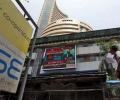
The 30-share bluechip index is rebalanced on a semi-annual basis with next rejig slated for June 18.

The Maharashtra police has booked Indiabulls group companies, including its flagship Indiabulls Housing Finance (IBHL), for allegedly siphoning off funds and for accounting irregularities committed by the promoters and directors of the company between 2014 and 2020. A first information report was registered by the Palghar police on April 13 under various sections of Indian Penal Code dealing with cheating, fraud and criminal conspiracy. The move comes after Palghar's judicial magistrate passed an order under Section 156 (3) of the Code of Criminal Procedure (power to direct police/agency to investigate the matter), following a complaint filed by Ashutosh Kamble, a shareholder of IBHL.

While the stocks met various other inclusion parameters, there were fears they may still get disqualified given the sharp run up in their stock prices.

The listing day gain-to-loss ratio for FY21 was 71 per cent, the highest since FY17, when it was 85 per cent.

'Quite a few notices have been issued in both black money and benami transactions.'

The government is considering a provision to provide an exit window to holders of cryptocurrencies (cryptos), keeping in mind that banning them outright could deal a blow to investors sitting on them for years. According to sources in the government, the framework in the making may propose a grace period of three to six months for investors before prohibiting the possession, trading, mining, and issuing of cryptos. A group of secretaries chaired by the Cabinet secretary is learnt to have met in mid-March and discussed issues associated with cryptos, including the consequences of banning them and also on possible substitutes of blockchain technology - an advanced technology Bitcoin uses.

The finance ministry said the sharp inflows last fiscal were due to the government's policy initiatives and economic recovery.

The idea is to do away with the need for the approval of the Core Group of Secretaries on Divestment for privatisation of companies, especially in non-strategic sectors.

'It won't help being complacent about the momentum and valuations of equities that currently exist.'

Jhunjhunwala, one of India's well-known individual investors, was speaking at the India Economic Conclave organised by the Times Network. He said he won't rule out 5-10 times gains in state-owned banks over the next five years. Shares of PSBs have been on a tear this year. The Nifty PSB index is up 20 per cent so far this year.
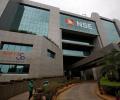
Sebi had, in February, dropped allegations of fraudulent and unfair trade practices against NSE's former heads Ravi Narain and Chitra Ramakrishna in the co-lo case.

The government has brought in changes to the investment pattern for non-government provident funds, and superannuation and gratuity funds, enabling them to invest up to 5 per cent in the units of Category I and Category II alternative investment funds (AIFs), subject to some caveats. The development is part of the central government's strategy to channelise domestic savings and improve their returns to attract more investment in the said sectors. At present, these funds typically invest a minimum 45 per cent in government securities, besides new instruments, such as exchange-traded funds and real estate investment funds, while a portion in equity-related instruments.
 © 2025 Rediff.com - Investor Information - Advertise with us - Disclaimer - Privacy Policy - Sitemap - Feedback - About us - Terms of use - Grievances